
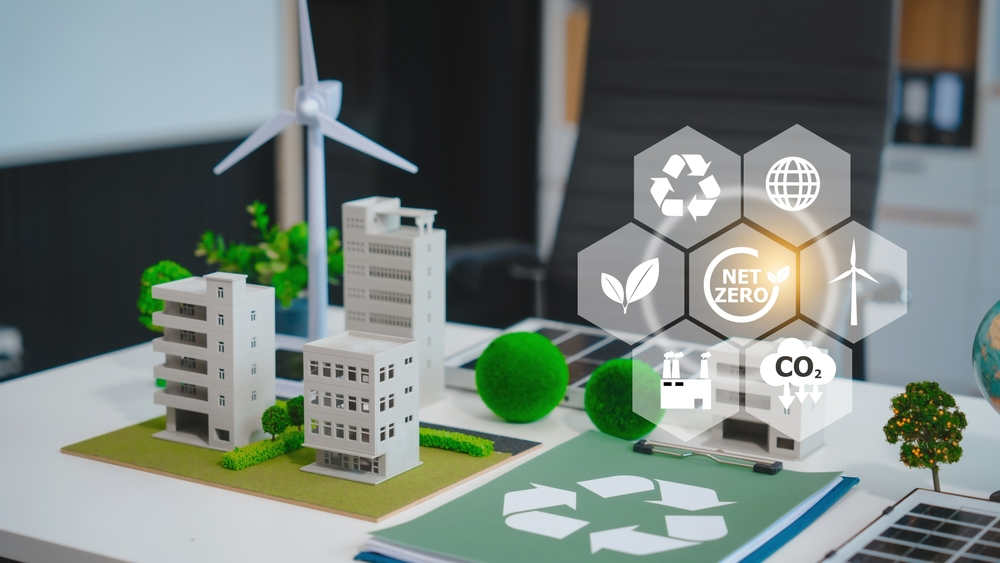
The business landscape of the 21st century is undergoing a major shift, driven by the dual forces of technology and innovation. Technology stands out as a pivotal enabler, offering innovative solutions that help businesses sustainable to reduce their environmental footprint while also enhancing efficiency and profitability.
Read More: Sustainability dan Sustainable Business

With sustainability now a key element of corporate strategy, these technological developments are essential in facilitating sustainable practices. This article will go through how technology is transforming sustainable business practices and the various ways it contributes to a greener future.
Read More: Sustainable Business dan 5 Pelatihan Online
Renewable Energy Technologies Through Sustainable Business
One of the most significant contributions of technology to sustainability is in the realm of renewable energy. Renewable energy technologies are emerging as a more favourable alternative to conventional energy sources to address fossil fuel-related issues. Being indigenous and non-polluting, these technologies can tackle both supply security concerns and environmental challenges.
The advancement in solar, wind, and hydroelectric power technologies have made it possible for businesses to reduce their reliance on fossil fuels. Solar panels and wind turbines, for instance, have become more efficient and cost-effective, enabling companies to generate their own clean energy.
Sustainable Business in Manufacturing Practices
The manufacturing sector, traditionally a significant contributor to environmental degradation, is undergoing a transformation thanks to technological advancements. Technologies such as the Internet of Things (IoT), artificial intelligence (AI), and robotics are enabling more sustainable manufacturing processes.
Utilization of IoT sensors can monitor equipment performance and energy usage, predicting maintenance needs and reducing downtime. Also, the invention of AI algorithms has become a solution to optimize production schedules and processes, minimizing waste and maximizing resource efficiency. Meanwhile, industries that are doing a repetitive job, they can utilize Robotic Process Automation (RPA). This robotics technology can perform precise tasks with minimal error so it can reduce material wastage, enhancing overall sustainability.
Circular Economy and Waste Management Through Sustainable Business
Technology is also playing a crucial role in promoting the circular economy. A model of circular economy emphasizes the reuse, refurbishment, and recycling of materials to create a closed-loop system. Advanced recycling technologies, such as chemical recycling, can break down complex materials into their basic components, which can then be reused in manufacturing.
Nowadays, it found that AI-powered sorting robots, greatly improve recycling accuracy and efficiency, directly addressing the global waste crisis. Besides, there are also digital marketplaces for second-hand goods and repair services. These technology-driven platforms extend product lifespans and encourage repair rather than replacement, promoting a culture of mindful consumption.
Sustainable Business in Agriculture and Food Production
In the agriculture and food production sectors, technology is also a driving factor to support sustainability in business. Applying technology in this sector will help a lot at least in these 3 areas; precision farming, vertical farming, and lab-grown foods.
First, precision farming uses IoT sensors, drones, and AI to monitor crop health, soil conditions, and weather patterns, allowing farmers to apply water, fertilizers, and pesticides more efficiently. Secondly, technology in vertical farming involves growing crops in stacked layers, often in urban settings, reducing land use and water consumption while eliminating the need for long transportation routes. Next, the technology of lab-grown foods, such as cultured meat, offers a sustainable alternative to traditional livestock farming, reducing the environmental impact associated with meat production.
Green Building Technologies
The construction and real estate sectors of business are also benefiting from technological advancements in sustainability. Green building technologies, such as energy-efficient HVAC systems, smart lighting, and sustainable building materials, are helping to reduce the environmental impact of buildings.
It is also known that there is Building Information Modeling (BIM) software that allows architects and engineers to design structures with sustainability in mind, optimizing energy usage and reducing waste. Additionally, smart building technologies enable real-time monitoring and control of energy consumption, enhancing overall building efficiency.
The role of technology in sustainable business cannot be overlooked. By embracing these innovations, businesses can not only reduce their environmental impact but also enhance efficiency, reduce costs, and gain a competitive edge in the market.
Now, businesses can utilize the emergence of technology even more, such as to calculate the emission of the production process in such an easy way. Satuplatform is an all-in-one sustainable solution that will provide you with a simulation to count the emissions. Get the FREE DEMO, now!