Program Rehabilitasi Mangrove, Mengapa Penting dan Cerita dari Kampung Laut Cilacap
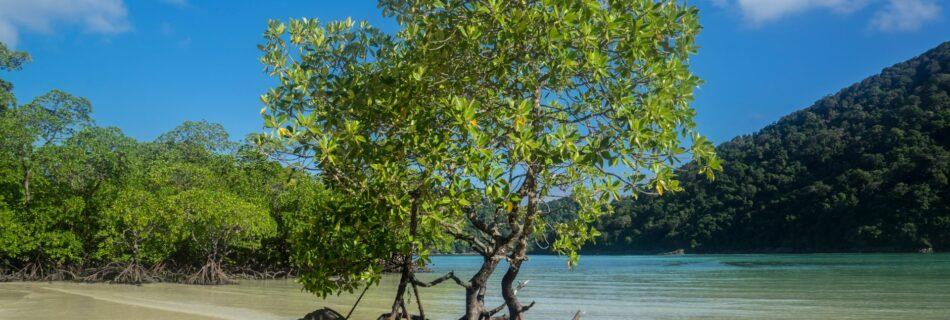
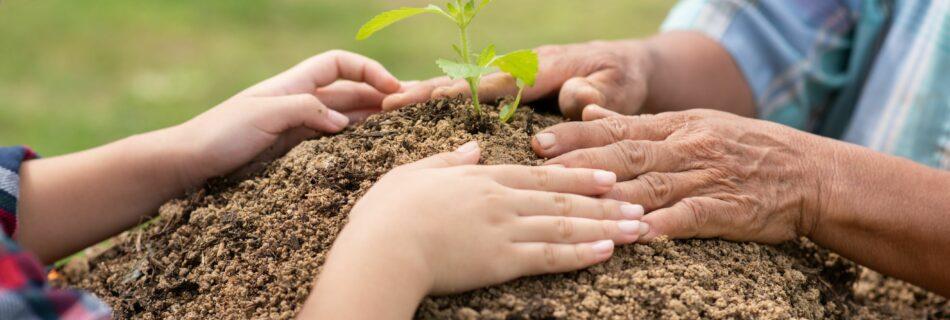
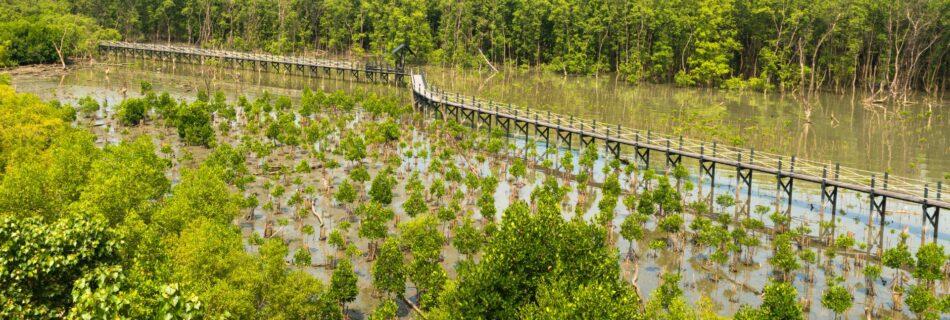
Rehabilitasi mangrove sangat penting untuk melindungi ekosistem pesisir dan mengurangi dampak perubahan iklim. Mangrove berperan dalam mencegah abrasi pantai dan menyerap karbon, membantu menekan emisi. Di Kampung Laut Cilacap, upaya rehabilitasi mangrove berhasil membawa perubahan positif, berkat partisipasi aktif masyarakat setempat dalam menjaga kelestarian lingkungan. Baca Juga: Lautan Sebagai Penyerap Karbon Alami Pentingnya Rehabilitasi Hutan Mangrove Rehabilitasi mangrove memiliki peran strategis, baik dalam mendukung program pemerintah maupun dalam menjaga keseimbangan ekosistem. Dari sudut pandang ekologis, mangrove berfungsi sebagai pelindung alami pantai dari abrasi, rumah bagi berbagai spesies laut, serta pencegahan intrusi air asin ke daratan. Selain itu, ekosistem mangrove juga memiliki dampak sosial dan ekonomi yang signifikan, terutama bagi komunitas pesisir yang bergantung pada keberlangsungan mangrove untuk kehidupan mereka. “Pentingnya menjaga mangrove ini tidak hanya untuk ketersediaan oksigen, tetapi juga untuk penanggulangan bencana seperti tsunami, abrasi yang makin parah, dan bencana lainnya. Tentu saja, selain untuk lingkungan, ekosistem mangrove juga bisa meningkatkan ekonomi masyarakat karena menjadi tempat udang dan ikan-ikan kecil bersembunyi atau membuat sarang yang nantinya bisa ditangkap oleh nelayan,” Ujar Aminul Ichsan, Manajer Operasional LindungiHutan. Apalagi, potensi karbon biru yang dimiliki mangrove sangat besar, di mana ekosistem ini mampu menyimpan sekitar 20Pg C, dengan 70-80% karbon tersimpan dalam tanah sebagai bahan organik. Dengan kemampuannya dalam menyerap dan menyimpan karbon, rehabilitasi mangrove menjadi salah satu solusi penting dalam upaya mitigasi perubahan iklim. Oleh karena itu, langkah ini membutuhkan dukungan dari berbagai pihak, termasuk pemerintah, masyarakat lokal, serta perusahaan yang ingin terlibat dalam program carbon offset atau perdagangan karbon. Baca juga artikel lainnya : Mengenal Perdagangan Karbon dan Implementasinya di Indonesia Perusahaan maupun korporasi juga dapat berkontribusi dalam program rehabilitasi mangrove sebagai bagian dari komitmen untuk mendukung mitigasi perubahan iklim dan menciptakan masa depan yang lebih berkelanjutan. Selain menjadi upaya untuk pelestarian lingkungan, ini juga membuka peluang untuk terlibat dalam skema perdagangan karbon yang makin relevan di era saat ini. Program Rehabilitasi Mangrove Menciptakan Peluang Lapangan Kerja Upaya konservasi dan rehabilitasi mangrove tidak hanya memerlukan partisipasi pemerintah maupun sektor swasta, tetapi juga keterlibatan aktif dari masyarakat setempat. Program penanaman mangrove bisa dijalankan dengan menggandeng kelompok tani lokal, yang berperan penting dalam setiap tahap proses. Mitra petani lokal inilah yang ikut berkontribusi mulai dari penyediaan bibit, pelaksanaan penanaman, hingga pemantauan pertumbuhan serta kegiatan penyulaman jika diperlukan. Kolaborasi ini tidak hanya mendukung keberhasilan program rehabilitasi mangrove, tetapi juga memberdayakan masyarakat setempat dalam menjaga kelestarian lingkungan. Cerita Rehabilitasi Hutan Mangrove Kampung Laut Cilacap Di Kampung Laut Cilacap, terdapat sosok penggerak konservasi bernama Thomas Heri Wahyono, atau kerap disapa Wahyono. Beliau adalah tokoh sentral dalam gerakan penghijauan dan rehabilitasi mangrove. Wahyono menyaksikan secara langsung perubahan signifikan yang terjadi di hutan mangrove Kampung Laut Cilacap. “Tahun 1995 terjadi penebangan hutan besar-besaran yang dijadikan sebagai tempat budidaya udang tetap kemudian tidak bertahan lama sampai tahun 1990,” ungkap Wahyono tokoh penggerak penghijauan dan Ketua Kelompok Krida Wana Lestari. . Salah satu tantangan terbesar yang dihadapi dalam upaya konservasi mangrove adalah alih fungsi lahan. Hal tersebut kerap dilatarbelakangi oleh potensi keuntungan ekonomi jangka panjang, tetapi mengabaikan tanggung jawab lingkungan. Ketika kerusakan lingkungan terjadi, masyarakat setempat justru yang paling merasakan dampaknya secara langsung. “Enggak bertahan lama, ternyata udang terkena penyakit, sehingga kami di situ mulai merasa prihatin karena kondisi Segara Anakan ini ribuan hektare yang rusak akibat dijadikan lahan budidaya, sementara akibat merugi para investor pada kembali ke asalnya masing-masing yang akhirnya meninggalkan lahan gundul dan rusak, dari situ kami mulai melakukan kegiatan penanaman dan rehabilitasi mangrove,” sambung Wahyono. Melihat kondisi hutan mangrove yang makin rusak, Wahyono tidak tinggal diam dan memutuskan untuk memulai aksi nyata. Selama lebih dari dua dekade, Wahyono secara konsisten melakukan upaya rehabilitasi mangrove, hingga akhirnya kondisi hutan yang ada perlahan bisa pulih kembali. Bersama Kelompok Krida Wana Lestari, ia mengabdikan banyak waktu untuk kegiatan pembibitan, pembersihan, dan perawatan hutan mangrove. Berkat upaya ini, lebih dari 200 hektare lahan mangrove di Kampung Laut berhasil ditanami kembali, hasil dari kerja keras dalam menjaga lingkungan selama puluhan tahun. “Mungkin sudah lebih dari 200 hektare yang kami tanam dari tahun 2000 sampai hari ini, mungkin kalau dengan lembaga lain dan bantuan lain udah lebih dari 300 hektare,” pungkas Wahyono. /*! elementor – v3.23.0 – 05-08-2024 */ .elementor-heading-title{padding:0;margin:0;line-height:1}.elementor-widget-heading .elementor-heading-title[class*=elementor-size-]>a{color:inherit;font-size:inherit;line-height:inherit}.elementor-widget-heading .elementor-heading-title.elementor-size-small{font-size:15px}.elementor-widget-heading .elementor-heading-title.elementor-size-medium{font-size:19px}.elementor-widget-heading .elementor-heading-title.elementor-size-large{font-size:29px}.elementor-widget-heading .elementor-heading-title.elementor-size-xl{font-size:39px}.elementor-widget-heading .elementor-heading-title.elementor-size-xxl{font-size:59px} Similar Article Program Rehabilitasi Mangrove, Mengapa Penting dan Cerita dari Kampung Laut Cilacap Rehabilitasi mangrove sangat penting untuk melindungi ekosistem pesisir dan mengurangi dampak perubahan iklim. Mangrove berperan dalam mencegah abrasi pantai dan menyerap karbon, membantu menekan emisi. Di Kampung Laut Cilacap, upaya rehabilitasi mangrove berhasil membawa perubahan positif, berkat partisipasi aktif masyarakat setempat dalam menjaga kelestarian lingkungan. Pentingnya Rehabilitasi Hutan Mangrove Rehabilitasi mangrove memiliki peran strategis, baik dalam mendukung program pemerintah maupun dalam menjaga keseimbangan ekosistem. Dari sudut pandang ekologis, mangrove berfungsi sebagai pelindung alami pantai dari abrasi, rumah bagi berbagai spesies laut, serta pencegahan intrusi air asin ke daratan. Selain itu, ekosistem mangrove juga memiliki dampak sosial dan ekonomi yang signifikan,… Mewujudkan Program CSR Perusahaan yang Berkelanjutan dan Berdampak Program CSR perusahaan kini tidak bisa lagi hanya sebatas memberi atau sesuatu yang sifatnya charity. Namun, poin berdampak dan berkelanjutan dari after program-nya yang juga perlu diperhatikan. Lantas, bagaimana cara mewujudkan CSR yang berdampak dan berkelanjutan? Simak ulasan selengkapnya! Baca Juga: Memitigasi Perubahan Iklim Melalui Program CSR (Corporate Social Responsibility) Apa itu Program CSR Perusahaan? Setiap perusahaan memiliki tanggung jawab sosial atau Corporate Social Responsibility (CSR) yang mencakup kewajiban terhadap konsumen, karyawan, pemegang saham, komunitas, dan lingkungan dalam berbagai aspek operasionalnya. Tanggung jawab ini umumnya berhubungan dengan dampak lingkungan, seperti polusi, limbah produksi, keamanan produk, dan kesejahteraan tenaga kerja. Jadi,… Melihat Potensi Blue Carbon Indonesia dari Kawasan Hutan Mangrove Blue carbon menjadi salah satu topik pembahasan menarik saat ini. Apalagi, Indonesia merupakan negara maritim dan kepulauan yang berkomtimen dalam mencapai target penurunan emisi dalam rangka mitigasi perubahan iklim. Tentu, potensi besar ekosistem blue carbon tidak bisa dibiarkan begitu saja. Sebelum lebih jauh, apa itu blue carbon? Berikut ulasan selengkapnya! Apa yang Dimaksud dengan Blue Carbon? Sederhananya, karbon biru atau blue carbon adalah karbon yang diserap dan disimpan oleh ekosistem laut dan pesisir. Ekosistem …
Read more “Program Rehabilitasi Mangrove, Mengapa Penting dan Cerita dari Kampung Laut Cilacap”